

Subscribe to stay informed, inspired and involved.
Subscribe
Sign up with your email

The healthcare sector stands at a critical juncture as sustainability becomes a defining priority. The COP30 Health Day in November 2025 underscored the urgent need to address the climate-health nexus, while national governments are rolling out healthcare-specific sustainability strategies. For companies, this means navigating a complex landscape: decarbonizing operations and supply chains, complying with evolving regulatory frameworks across multiple jurisdictions, and embedding access and resilience into health outcomes—all while maintaining trust through transparent, science-based communication. Sustainability is no longer optional; it is a strategic imperative shaping the future of global health.
ESG TRENDS AND CHALLENGES SPECIFIC TO HEALTHCARE
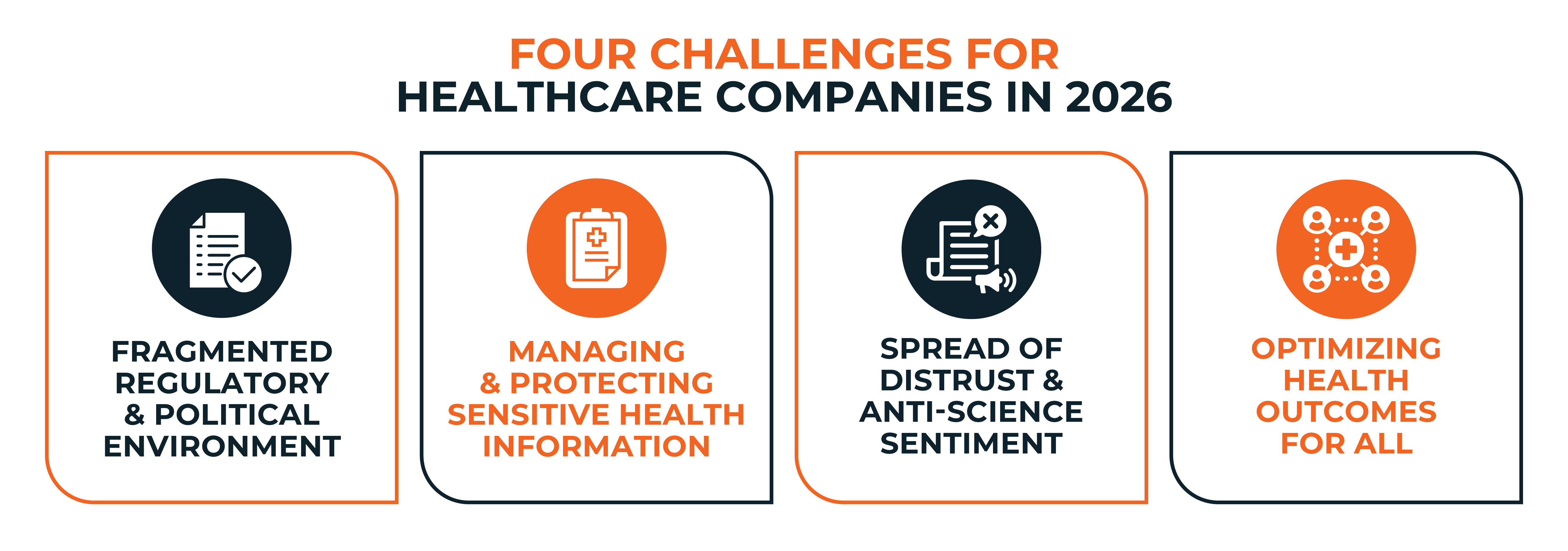
Sustainability efforts within the healthcare ecosystem are evolving to address a complex mix of priorities and risks. Organizations must strengthen cybersecurity and data management to safeguard sensitive health information and maintain trust in an era of digital transformation, while simultaneously using that data to optimize health outcomes for all by embedding equity and access into climate and operational strategies. These ambitions are complicated by regulatory and political fragmentation, as national and regional disclosure frameworks create compliance challenges, and by the rise of anti-science sentiment and growing distrust, which threatens stakeholder engagement and public confidence. Together, these dynamics underscore the need for integrated approaches that link environmental goals with resilience and access.
FRAGMENTED REGULATORY AND POLITICAL ENVIRONMENT
In recent years, Europe has rapidly increased sustainability initiatives and regulations, setting a new global benchmark and creating ripple effects for multinational companies through increasingly stringent supply chain expectations. This momentum is increasing healthcare-specific sustainability initiatives and is no longer limited to Europe, as similar programs are gaining traction in countries such as Australia and Canada. Many of these initiatives require the measurement, reporting, and reduction of greenhouse gas emissions, while others also include waste reduction and water saving initiatives. These requirements are not uniform, creating a patchwork of expectations that companies within the healthcare ecosystem—health systems, drug and device manufacturers, and insurers/payers—must navigate.
Covering nearly every facet of the healthcare industry, these policies and initiatives aim to embed environmental responsibility into core operations, challenging organizations to adapt quickly and align with evolving global standards. This shift recognizes that environmental conditions, such as air quality, water safety, and exposure to pollutants, are fundamental determinants of health, making sustainability not just an operational priority, but a public health imperative.
Although global momentum for ESG and climate‑related disclosures has grown, most countries remain in the early phases of developing and implementing formal regulations for sustainability within their healthcare systems. As a result, sustainability initiatives and disclosure in healthcare remain largely driven by voluntary efforts, pilot programs, and broader stakeholder pressures. However, this landscape is expected to shift in the coming years as countries move toward more formalized and mandatory sustainability requirements across the healthcare ecosystem. Rather than waiting for regulatory clarity to arrive, the organizations gaining competitive advantage today are using this voluntary period as a strategic window to establish their own disclosure norms, becoming rule-setters rather than rule-followers when mandatory frameworks inevitably arrive.
Examples of Global Health Care Sustainability Initiatives
|
Country |
Initiative Name |
Status |
Goal |
|
United Kingdom |
Greener National Health Service (NHS) National Programme |
In Implementation |
The NHS became the first healthcare system globally to commit to net zero, setting a 2040 target for directly controlled emissions and a 2045 target for emissions it can influence. |
|
Spain |
Spanish Global Health Strategy 2025-2030 |
Early Implementation Phase |
Promote sustainable health systems and an integrated "One Health" approach linking human, animal, and planetary health. |
|
Switzerland |
Health2030 |
In Implementation |
Focus on healthcare system quality, cost containment, digital health, and chronic disease. Environmental sustainability is one of eight policy objectives but doesn’t set specific GHG or emissions reduction targets. |
|
Canada |
HealthADAPT |
In Implementation |
Create climate-resilient health systems by increasing understanding of climate‑related health risks, identifying vulnerable communities, and supporting the development of climate and health adaptation plans. |
|
Australia |
National Health and Climate Strategy |
In Implementation |
Reduce health system emissions and build climate resilience through 49 specific actions, contributing to Australia's national net zero target by 2050. |
MANAGING AND PROTECTING SENSITIVE HEALTH INFORMATION
The rapid digitization of healthcare has dramatically expanded both the opportunities and the risks associated with managing sensitive health information. As providers and companies in the healthcare ecosystem increasingly rely on electronic health records, connected medical devices, and AI-driven analytics, they face escalating threats such as data breaches, and ransomware attacks. These vulnerabilities not only expose sensitive medical data but also risk severe reputational harm to organizations whose data is impacted.
Recent data underscores the growing vulnerability of the healthcare sector to cyber risks. According to the FBI's 2024 Internet Crime Report, healthcare experienced more cyber incidents than any other critical infrastructure industry, with 444 reported cases including both ransomware attacks and data breaches. These incidents triggered 592 regulatory filings related to compromised protected health information, affecting a record 259 million Americans.[1] The financial implications of these cyber incidents are significant: in 2024, the average healthcare data breach cost $7.42 million per incident, with total industry losses exceeding $21.9 billion due to ransomware‑related downtime alone. Compared to 2019 baseline measurements, the financial impact of cyber incidents has increased by more than 340%, reflecting the growing sophistication of threat actors and their focus on disrupting critical patient care infrastructure.[2] As reliance on digital systems continues to grow, so too does the need for careful oversight of how health data is managed and protected.
Healthcare organizations must also strike a careful balance between leveraging data for innovation and ensuring that patient rights and privacy remain protected. Ethical analyses emphasize the tension between maintaining strict privacy controls and enabling timely access to data for clinical care, medical research, and public health initiatives. Overly restrictive measures can hinder medical innovation and slow emergency response, while insufficient protections erode confidence in the system and put individual patients at risk. Emerging discussions around consent, data ownership, and responsible AI further underscore the need for transparent governance frameworks that support privacy without stifling progress. In practice, this may mean adopting enhanced privacy technologies, strengthening governance practices and oversight, and ensuring clear communication with patients about how their data is used. Healthcare organizations must take steps to uphold both innovation and integrity in an increasingly data driven world.
SPREAD OF DISTRUST AND ANTI-SCIENCE SENTIMENT
The spread of distrust and anti‑science sentiment has become a growing challenge for healthcare providers, pharmaceutical companies, and public health institutions. Surveys show that public confidence in healthcare and science has sharply declined over the past several years. For example, U.S. trust in doctors and hospitals fell from about 70% in 2020 to just over 40% by 2025, while trust in scientists and researchers dropped from 58% to roughly 36% during the same period.[3] The Organisation for Economic Co-operation and Development (OECD) also reports that satisfaction with healthcare systems declined in 16 out of 19 OECD countries between 2021 and 2023, suggesting this erosion of trust isn't unique to the United States.[4]
This erosion of trust is closely tied to increased exposure to misinformation, politicization of public health, and widespread skepticism toward scientific consensus. As studies have shown, this mistrust directly fuels behaviors like vaccine hesitancy, greater belief in conspiracy theories, and decreased adherence to public health recommendations, all of which hinder providers’ and pharmaceutical companies’ ability to promote effective care and health interventions.
The anti‑science movement has created an increasingly challenging environment for healthcare organizations, requiring them not only to deliver high‑quality care but also to actively counter misinformation, strengthen communication strategies, and rebuild relationships with the communities they serve. Now more than ever, it is integral for healthcare companies to analyze how they communicate with stakeholders, as this moment presents a powerful opportunity to strengthen ESG disclosures and provide transparent, reader‑friendly information that can help rebuild credibility and counteract misinformation.
OPTIMIZING HEALTH OUTCOMES FOR ALL
Using data to optimize health outcomes for all, particularly by embedding equity and access into climate and operational strategies, presents both a significant challenge and a powerful opportunity for healthcare companies. Climate change is increasingly recognized as a structural determinant of health, disproportionately affecting marginalized communities through extreme weather events, food insecurity, pollution exposure, and other climate‑driven stressors. Healthcare systems must therefore integrate public health data into climate resilience planning to avoid deepening existing disparities. Public health frameworks highlight that conscious consideration of equity when designing climate and health interventions helps ensure that the benefits of climate action are shared across all communities.
Healthcare organizations have an emerging opportunity to leverage data-driven strategies to better identify and respond to the needs of populations at greatest risk. Healthcare companies that successfully align climate strategies with public health data can not only mitigate risk but also drive more effective, patient-centered care models that deliver long-term value for both communities and the healthcare system.
THE DRIVERS OF CHANGE
Beyond regulatory compliance, stakeholders are also demanding accountability. From healthcare-focused conferences to the American Hospital Association Sustainability Roadmap and Belem Health Action Plan, we’re seeing increased stakeholder interest in building resilient healthcare systems across the globe. This growing emphasis on resilience reflects recognition that the healthcare ecosystem must be equipped not only to withstand climate‑driven shocks—such as extreme heat, poor air quality, flooding, and other environmental hazards—but also to manage changing disease profiles and increased patient volumes as climate impacts intensify. Resilient systems also require strengthened infrastructure and adaptable operational models so they can continue delivering high‑quality care despite supply‑chain disruptions, emerging public health threats, and evolving community needs.
Patients, investors, and advocacy groups increasingly expect healthcare companies to demonstrate measurable progress toward these resilience goals alongside broader sustainability commitments. As a result, ESG performance is becoming tightly linked to reputation, market access, cost effectiveness, and long‑term viability. Organizations that proactively build climate‑ready, equitable, and operationally resilient care systems are better positioned to reduce risk, safeguard patient outcomes, and maintain continuity of services, even as global pressures grow more complex and unpredictable.
Not only does the healthcare sector have a unique responsibility to drive better health outcomes through sustainability, but also it has a unique opportunity to unlock value through proactively aligning with emerging global standards, strengthening operational resilience, and leveraging sustainability as a catalyst for innovation, efficiency, and long‑term competitive advantage. Sodali & Co can help healthcare organizations unlock this value by offering deep industry insight, sustainability expertise, and strategic guidance to accelerate meaningful progress.
Learn more about our Sustainability Advisory.
Summary
Author

Sabrina Bennis
Manager, Sustainability
London
sabrina.bennis@sodali.com

Aubrey Suber
Associate, Sustainability
aubrey.suber@sodali.com