
Subscribe to stay informed, inspired and involved.
Subscribe
Sign up with your email

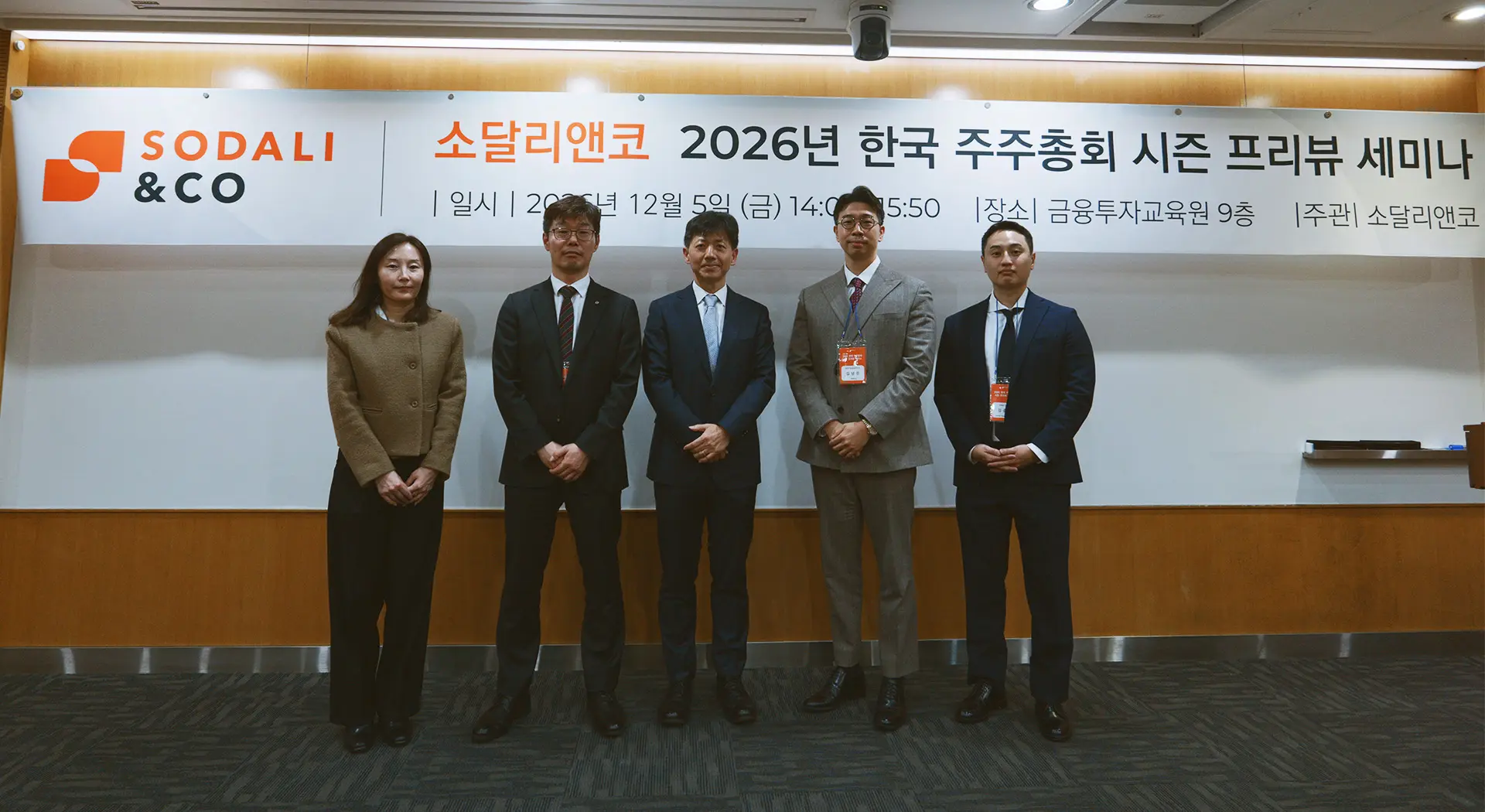
On Friday, December 5, Sodali & Co hosted senior experts from leading global and domestic proxy advisory organizations (Glass Lewis, Sustainvest, the Ajou Institute of Corporate Management, and the Korea ESG Research Institute) as well as issuers for a seminar exploring important takeaways from last year’s proxy season and strategic priorities for the 2026 season.
Key Takeaways:
2025 Season Review
- Data indicated that the most significant factors driving “against” recommendations on director election proposals were concerns around independence, governance shortcomings, and directors serving excessively long tenures.
- Disclosure practices continued to lag behind those in other markets. For example, only a limited number of companies provided English-language disclosures, and meeting documents often failed to clearly outline post-meeting board composition.
- Shareholder proposals grew not only in number but also in complexity. Their focus expanded beyond short-term returns to include governance reforms and strategies to influence management toward sustainable, long-term value creation.
2026 Season Preview
- Looking ahead to 2026, proposals are expected to reflect adjustments required by recent revisions to the Commercial Act, such as updates to articles of incorporation and director appointments.
- Transparency, board oversight, and accountability will take center stage, making it critical for companies to present changes with strong rationales supported by clear and coherent narratives.
- Shareholders will increasingly demand detailed reporting on risk oversight, capital strategies, and value-up initiatives, including progress updates and implementation plans.
- Activism is expected to remain robust, particularly targeting undervalued companies or those in need of governance improvements. In cases of dispersed ownership or where major shareholders hold relatively small stakes, shareholder influence is likely to intensify.
- Proxy advisory firms are refining their policies to enable deeper analysis of proposals within this evolving context.
With Korea’s regulatory landscape evolving rapidly, including recent changes to the Commercial Act that is expected to further reshape proxy analysis standards, the seminar examined how these developments, along with shifting stakeholder expectations, are influencing corporate behavior and investor involvement in shareholder meetings.
While 2026 is poised to bring significant changes, the trend toward stronger oversight and enhanced transparency to improve governance and corporate values is already well established.
As year-end approaches and the market prepares for the upcoming season in March, it is essential for companies to align their focus with these objectives.
Build Board Confidence
Primarily, companies should either demonstrate robust board functionality and oversight or clearly outline their path to achieving it. As boards face increasing demands to enhance accountability and responsiveness to shareholder concerns, it is essential to communicate that serving shareholders better is a top priority for the company.
Address Governance Issues
For companies with existing governance challenges, this focus is vital, as they are compelled to implement meaningful reforms. Proactively ensuring that their boards are well-structured and equipped to tackle these challenges is important. This involves adopting best practices to eliminate negative perceptions and foster trust among shareholders.
Enhance Disclosure Practices
Companies should provide thorough insights into their current status, progress, and future plans while actively addressing shareholder concerns. Specifically, companies must prepare comprehensive reports accessible to all shareholders on key topics such as risk management, capital strategies, and value-creation initiatives, including progress updates and implementation plans to demonstrate their commitment to sustainable long-term value.
Especially if changes occur in the board structure or company policies that may impact shareholder rights and values, a clear and robust rationale supported by convincing details will be expected.
Be Prepared for Activism
Furthermore, companies should be proactive in preparing for potential shareholder activism by assessing vulnerabilities in advance. Being ready to address activist proposals with well-reasoned strategies is imperative.
Fostering open communication with shareholders and inviting feedback on governance and strategic direction through various engagement channels can effectively address shareholder concerns and improve the response to shareholder proposals.
Stay Informed
Lastly, staying informed about ongoing changes is crucial for preparing proposals with context and rationales that align with evolving expectations, particularly as regulations continue to change and proxy advisory policies are also being updated.
Summary
Senior proxy advisors and issuers share key insights from Korea’s 2025 proxy season and outline emerging governance, disclosure and shareholder engagement priorities shaping the 2026 AGM cycle.